

SDG 6: Clean water and sanitation
Water Section:
Clean water and Sanitation Status in Lahore College for Women university
Clean water is vital for life because millions of people including children die every year from diseases associated with inadequate water supply, sanitation, and hygiene. Therefore, Lahore College for Women University ensure the easy and safe access of students and staff to water and sanitation.
Vegetation survey (2021) of Lahore College for Women University, Lahore.
By
Dr. Hannan Mukhtar
Assistant Professor
Department of Botany
Lahore College for Women University, Lahore.
Report Summery
According to the survey report, total area of green belt in LCWU is 1.6 acers,out of which 90% area is covered with grasses , 9.9% area is used to grow mesophyte species while 0.1% area with minimum water supply is used to grow xerophyte species. In grassland, Cynodon dactylon and Poa spp are prominent grass species , while mesophytic flora consisting of Mangifera indica (Mango), Syzgium cumini (Jaman), Musa Paradisiaca, (Banana), Citrus limon (lemon), C. Sinensis (Orange), Punica granatum (Pomegranate), Erythrina subirosa (Gul nishtar), Cassia fistula (Amaltas), Azadirachta indica (Neam), Pongamia pinnata (Sukh Chain), Melia azedarach (Dharak), Dalbergia sisoo (Sheesam), Alastonia scholaris (Devil tree), Eucalyptus camaldulensis (Sufaida), Ficus religiosa (Banyan tree), Buhinia varigata (Kachnar), Amaranthus viridus (Bthoo), Stevia sp. Whereas, 0.1 percent of total plant population consists of xerophytic and drought tolerant plants listed below, Calatropis procera (Aak), Ricinus communis (castroil plant) , Euphorbia splendons, E. prostrata, Aloe vera, Bryophyllum pinnatum (air plant), Parthinium hysterophorus (bitter weed), Jatropha curcas (Purging nut), Araucaria hetrophylla (monkey puzzle tree), Cycas revoluta (Sago palm), Pinus sp. are the main species of xerophytic and drought tolerant plant species grown on 0.1% area of green belts
Focal Person for SDG-17 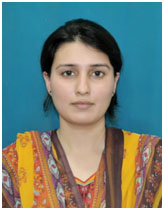
Ms. Annam Tariq
Quality Assurance Manager
QEC, LCWU. Lahore.
Description of SDG-17: Partnership for the Goals
SDG 17 explicitly relates to all other SDGs. Everyone needs to come together, governments, civil society, scientists, academia and the private sector, to achieve the sustainable development goals. SDG17 is the only compulsory SDG for inclusion in the overall rankings. As sustainable development is the responsibility of every part of society, across the world. It cannot be achieved without linkages, across the goals, but also between institutions, governments, companies, NGOs, and people.
Universities should support the SDGs through collaboration with other countries, promotion of best practices and the publication of data and evidence. Unless all partners work together towards the SDGs, they cannot be achieved.
Focal Person for SDG-16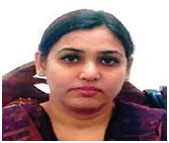
Ms. Rabia Asif
Assistant Professor,
Department of Management Science,
LCWU, Lahore
Ms. Rabia Asif is doing PhD from COMSATS University Islamabad, Lahore Campus. She has completed her MS (Management Sciences) from COMSATS University, Lahore Campus in 2011. Currently, she is working as Assistant Professor at the Department of Management Sciences, LCWU. Before she has assigned the task to look after the affairs of the Department of Management Sciences, LCWU for a period of more than four years from June 2016 to July 2020. Under her visionary leadership, the department has achieved academic and research milestone that have not been previously addressed.
As a focal person, I have been assigned to work on SDG-16: Peace, Justice and Strong Institutions.
Description of SDG-16: Peace, Justice & Strong Institutions
Sustainable Development Goal-16 is about "Peace, Justice and Strong Institutions." One of the 17 Sustainable Development Goals established by the United Nations in 2015, the official wording is: "Promote peaceful and inclusive societies for sustainable development, provide access to justice for all and build effective, accountable and inclusive institutions at all levels". The Goal has 12 targets to be achieved by 2030. Progress towards targets will be measured by 23 indicators.
The goal has ten "outcome targets": Reduce violence; protect children from abuse, exploitation, trafficking and violence; promote the rule of law and ensure equal access to justice; combat organized crime and illicit financial and arms flows, substantially reduce corruption and bribery; develop effective, accountable and transparent institutions; ensure responsive, inclusive and representative decision-making; strengthen the participation in global governance; provide universal legal identity; ensure public access to information and protect fundamental freedoms. There are also two "means of achieving targets": Strengthen national institutions to prevent violence and combat crime and terrorism; promote and enforce non-discriminatory laws and policies.
Reducing violent crime, sex trafficking, forced labor, and child abuse are clear global goals. The International Community values peace and justice and calls for stronger judicial systems that will enforce laws and work toward a more peaceful and just society.
Focal Person of SDG-14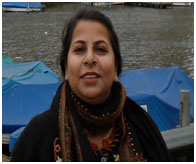
Dr. Maria Hussain
Associate Professor,
Department of Mathematics,
LCWU, Lahore
Description of SDG 14: LIFE BELOW WATER
“CONSERVE AND SUSTAINABLY USE THE OCEANS, SEA AND MARINE RESOURCES FOR SUSTAINABLE DEVBELOPMENT”
Oceans, seas and coastal areas are almost two-thirds of the earth surface. These are influencing earth climate, human health, biodiversity, and a great source of work-generation and food generation. Oceans are the regulator of global earth climate and are used as a sink for greenhouse gases. These are the huge source of water (97%) and provides us the oxygen to breathe. However, the OCEAN LIFE is under severe threat. The DEAD ZONES in oceans are increasing day by day. In 2008, there were about 400 dead zones worldwide. According to the statistics of 2019 the number has increased to 700. Major threats for LIFE BELOW WATER are the following:
(i) Plastic Thrown on Beaches
(ii) Marine Pollution (thrash or chemical discharge of industries)
(iii) Fishery Collapse (over or under fishery)
(iv) Ocean Warming
(v) Acidification
(vi) Eutrophication
All this is alarming because about three billion people’s livelihood is dependent on ocean. Keeping in view the UN in 2015 included it as SDG and fixed the following goals/targets [1]:
(i) By 2025, prevent and significantly reduce marine pollution of all kinds, in particular from land-based activities, including marine debris and nutrient pollution [1].
(ii) By 2020, sustainably manage and protect marine and coastal ecosystems to avoid significant adverse impacts, including by strengthening their resilience, and take action for their restoration in order to achieve healthy and productive oceans [1]
(iii) Minimize and address the impacts of ocean acidification, including through enhanced scientific cooperation at all levels [1]
(iv) By 2020, effectively regulate harvesting and end overfishing, illegal, unreported and unregulated fishing and destructive fishing practices and implement science-based management plans, in order to restore fish stocks in the shortest time feasible, at least to levels that can produce maximum sustainable yield as determined by their biological characteristics [1]
(v) By 2020, conserve at least 10 per cent of coastal and marine areas, consistent with national and international law and based on the best available scientific information [1]
(vi) By 2020, prohibit certain forms of fisheries subsidies which contribute to overcapacity and overfishing, eliminate subsidies that contribute to illegal, unreported and unregulated fishing and refrain from introducing new such subsidies, recognizing that appropriate and effective special and differential treatment for developing and least developed countries should be an integral part of the World Trade Organization fisheries subsidies negotiation [1]
(vii) By 2030, increase the economic benefits to Small Island developing States and least developed countries from the sustainable use of marine resources, including through sustainable management of fisheries, aquaculture and tourism [1]
(viii) Increase scientific knowledge, develop research capacity and transfer marine technology, taking into account the Intergovernmental Oceanographic Commission Criteria and Guidelines on the Transfer of Marine Technology, in order to improve ocean health and to enhance the contribution of marine biodiversity to the development of developing countries, in particular small island developing States and least developed countries [1]
(ix) Provide access for small-scale artisanal fishers to marine resources and markets [1]
(x) Enhance the conservation and sustainable use of oceans and their resources by implementing international law as reflected in UNCLOS, which provides the legal framework for the conservation and sustainable use of oceans and their resources, as recalled in paragraph 158 of The Future We Want [1]
Reference
[1] Sustainable Development Goals | United Nations Development Programme (undp.org)
Focal Person for SDG-13
Dr. Sumera Iqbal
Associate Professor,
LCWU, Lahore.
Dr. Sumera Iqbal has done her Ph.D. under Indigenous-5000 Scholarship Programme of Higher Education Commission, Pakistan from the Department of Plant Sciences, Quaid-e-Azam University Islamabad in 2009. Her field of interest is plant physiology with special reference to plant stress tolerance. She has Joined The Department of Botany LCWU Lahore in 2009 as Lecturer and Now she is working as Tenured Associate Professor in the same department. She has published around 50 research articles and supervised 36 BS, 23 MS and 1 Ph.D Students.
Description of SDG-13: Climate Action
The causes and impacts of man-made climate change and global warming are all around us, across the globe and in every aspect of our planetary habitat and its natural systems. Universities have a critical role to play in preparing society to adapt to the impacts of climate disruption not only by providing research and education related to adaptation strategies but also by sensitizing their students and making changes in their infrastructure, design and practices to demonstrate their commitment to the mission
LCWU being a leading women university of the country is fully aware of the need to design programs and policies in support of the UN’s Sustainable Development Goal on Climate Action and it is continuously trying to increase its capacity to implement the climate action plan.
Focal Person for SDG-12
Dr. Zaira Ahmad
Lecturer,
Department of Environmental Science,
LCWU, Lahore.
Contact info:This email address is being protected from spambots. You need JavaScript enabled to view it.
This email address is being protected from spambots. You need JavaScript enabled to view it.
This email address is being protected from spambots. You need JavaScript enabled to view it.
linkedin.com/in/zaira-ahmad-b7324021b
+923214560334
I am working as lecturer in Environmental Science Department since 2006. I have wide experience of teaching and research activities in the field of Environment especially related to Biodiversity & Conservation. I have number of original research articles in International and National journals. In future I am committed to promote research in the field of biodiversity in Pakistan.
I have been selected as a focal person of SDG 12 (Responsible Consumption and Production).
Description for SDG-12: Responsible Consumption and Production
The goal of SDG 12 is to explore how universities are working towards an efficient use of resources and the minimization of waste. This helps to protect the environment by minimizing the impact of production and consumption activities.